Halloween yard decorations work best when they tell one small story. Maybe it is a friendly pumpkin patch with a glowing path. Maybe it is a moonlit little graveyard, a row of crooked lanterns, or a handful of black silhouettes against the porch. Whatever the mood, the point is not to fill every square foot. It is to give neighbors and trick-or-treaters something they can understand in one glance, then discover as they walk closer.
That is good news for anyone who does not want to buy a garage full of props. A memorable yard usually starts with a focal point, a clear route to the door, a few layers of texture, and light that comes alive after sunset. This guide walks through seven ways to build that kind of display, whether you have a small front patch, a long walkway, or only a few steps to work with.
1. Choose a mood, then give it one focal point
Before you carry anything outside, choose the feeling you want the yard to have. Friendly and playful might mean pumpkins, smiling ghosts, warm amber lights, and a few bats. Moody and mysterious might mean bare branches, black shapes, muted gourds, and one detailed lantern. A haunted-garden look might use old-looking pots, tangled vines, and a simple path of light. The mood is your filter. If a decoration does not support it, it does not need to come outside.
Then choose the one thing that will read from the sidewalk. It could be a group of pumpkins at the base of a tree, a tall ghost shape, a small cemetery scene, or a glowing lantern cluster by the porch. Give that feature enough room around it to be seen. A yard filled with equally loud props gives the eye nowhere to land. One strong feature, supported by smaller pieces, feels far more considered.
Walk across the street or take a photo from the sidewalk before you commit. This is the distance most visitors will experience first. If the focal point disappears, make it larger or move it closer to the path. If several things compete, remove the weakest one. The best displays have an immediate answer to the question: what am I looking at?
2. Start at the curb and lead people toward the door
Think of the yard as a short route, not a stage that has to be filled. Your curb, driveway edge, walkway, steps, and front door create a natural sequence. Pick one place where the story begins, then use a few repeated details to lead the eye toward the entry. A pair of pumpkins by the sidewalk, three small lights at the edge of the path, and one brighter moment near the door is often enough.
Spacing matters more than quantity. Put decorations in loose groups rather than a straight, evenly spaced line. A cluster of three pumpkins looks more natural than three isolated pumpkins. One low silhouette near a shrub can be more effective than five spread across bare grass. Vary the heights a little, but do not turn the path into an obstacle course. The eye notices a gentle rhythm of low, medium, and taller shapes.
If the yard is small, use the front corner closest to the walkway as your scene. A lantern, a few pumpkins, and a simple silhouette can make that corner feel intentional without forcing you to decorate the whole lawn. If the yard is larger, repeat one material or color at a few moments along the route, then save your strongest detail for the porch.
3. Use pumpkins, branches, and leaves as the texture layer
Natural texture is what keeps a Halloween yard from feeling like a collection of objects dropped on the grass. Pumpkins, dried corn stalks, clipped branches, leaf piles, weathered pots, and a little straw or burlap can make the scene feel rooted in the season. You do not need every material. Choose two or three that fit your mood and repeat them.
For a friendly yard, start with orange and cream pumpkins, a few leaves, and warm wood. For a darker scene, let black branches and deep green foliage do most of the work, then add just a little orange or aged brass. The goal is contrast, not a rainbow of seasonal colors. A limited palette lets the shapes and light carry the interest.
Use natural elements as a base, not as clutter. Leave some grass, porch floor, and walkway visible. A few loose leaves look seasonal. A thick layer of leaves over the path can hide edges and make the route less clear. The same goes for cornstalks and branches. Keep them near a wall, planter, or porch post where they frame the scene instead of leaning into where guests walk.
4. Make warm light the evening focal point
At dusk, the light becomes the story. A display that looked charming in afternoon sun can disappear when the sky turns blue, while a few warm points of light can make even a simple yard feel special. Use lighting to guide the eye from the path toward the door, not to make every surface equally bright.
Start low. A few flameless lanterns or LED candles near the porch, at the base of a tree, or beside a pumpkin cluster create a calm glow. Aim for warm amber rather than flashing or color-changing light if you want the handmade details to show. One gentle focal point is more welcoming than a yard full of competing strobes.
For safety, keep cords out of the walking route, secure lightweight pieces before a windy night, and use flameless light around dry leaves, paper, fabric, and costumes. The National Fire Protection Association recommends battery-operated candles or glow sticks in jack-o-lanterns. That practical choice still gives you the warm, flickering effect people associate with Halloween, without introducing an open flame at the busiest part of the yard.
After dark, stand at the curb and check the scene. Can you see the walkway? Is the door still easy to find? Does the focal point glow, rather than everything glowing equally? Make one adjustment at a time. Move a lantern closer, turn off the least useful string, or clear a dark shadow that hides a step. Small edits have an outsized effect at night.
5. Use silhouettes sparingly for a scene that reads fast
Silhouettes are one of the easiest Halloween yard decorations because they work from a distance. Bats, cats, ghosts, ravens, crooked trees, and spiders are recognizable before anyone sees the details. The trick is to repeat one subject, not mix every subject you own. A small flight of bats rising from a shrub to the porch is a scene. One bat, one spider, one witch, and one skeleton in the same square of lawn is just visual traffic.
Place silhouettes where a darker background helps them read: against a pale wall, in a window, at the edge of a lighted porch, or tucked into a shrub. Check that they are secured and not likely to catch on passing costumes. If you use cobweb material, stretch it lightly over a corner or branch. It will read from a distance without tangling around the path or swallowing every other detail.
A small yard benefits from one silhouette family and one warm light source. A larger yard can use a second moment farther back, but the same rule applies: leave breathing room. Empty space is what makes the shapes feel mysterious instead of messy.
6. Give the display a simple after-dark test
Before Halloween night, turn on the lights and look at the yard from three places: the curb, the first step, and the door. From the curb, the focal point should be easy to spot. From the walkway, visitors should be able to see where they are going. From the door, the scene should still feel inviting rather than like a bright wall of light behind them.
If one view feels weak, adjust only one thing. Bring the focal light closer to the feature you want people to notice. Move a silhouette against a calmer background. Remove a decoration that adds bulk without adding to the story. This short test is especially useful when a display has several light sources, because it helps you see whether they are guiding the eye or competing for it.
7. Keep the path clear for trick-or-treaters
The most successful Halloween yard still has one important job: getting people safely to the door and back again. Keep walkways, steps, railings, the doorbell, and the candy handoff area open. Avoid cords, stakes, low props, loose fabric, and extra-dark corners along the route. If visitors have to step around the display, the display is too close.
Choose weight and scale with the weather in mind. Put heavier pumpkins and lanterns low and stable. Secure lightweight shapes, signs, and fabric pieces so a breeze does not move them into the path. If you expect wind or rain, a simple display will look better at the end of the evening than a more elaborate one that needs rescuing every hour.
Do a guest walk before Halloween night. Carry a bag or a small bucket, approach from the sidewalk, and make sure you can see every change in level. Can you reach the doorbell without brushing past a decoration? Can a parent and child pass side by side? Is there enough light to spot the first step? If the answer is no, move or remove a piece. That is not giving up on the scene. It is editing it into a display guests can enjoy.
8. Repeat one detail at the porch, windows, and table
A yard looks finished when it hints at the decor inside. Repeat one cue at a nearby window, on the porch, or on a table visible through the glass. It might be the same warm light, a simple bat shape, natural wood, or a small pumpkin. The details do not have to match exactly. They only need to feel like they belong to the same evening.
For instance, a glowing path can lead to a small lantern group on the porch, then a single warm-lit window beyond it. The Halloween window decorations guide can help you carry that glow behind the glass. If your porch is the main gathering place, the Halloween front porch guide shows how to layer the steps without closing off the route.
Keep the final yard edit simple. Straighten the focal point, clear the path, check the lights, then stop. The restraint is what allows the handmade and natural details to feel special.
Bring a handmade glow to the yard
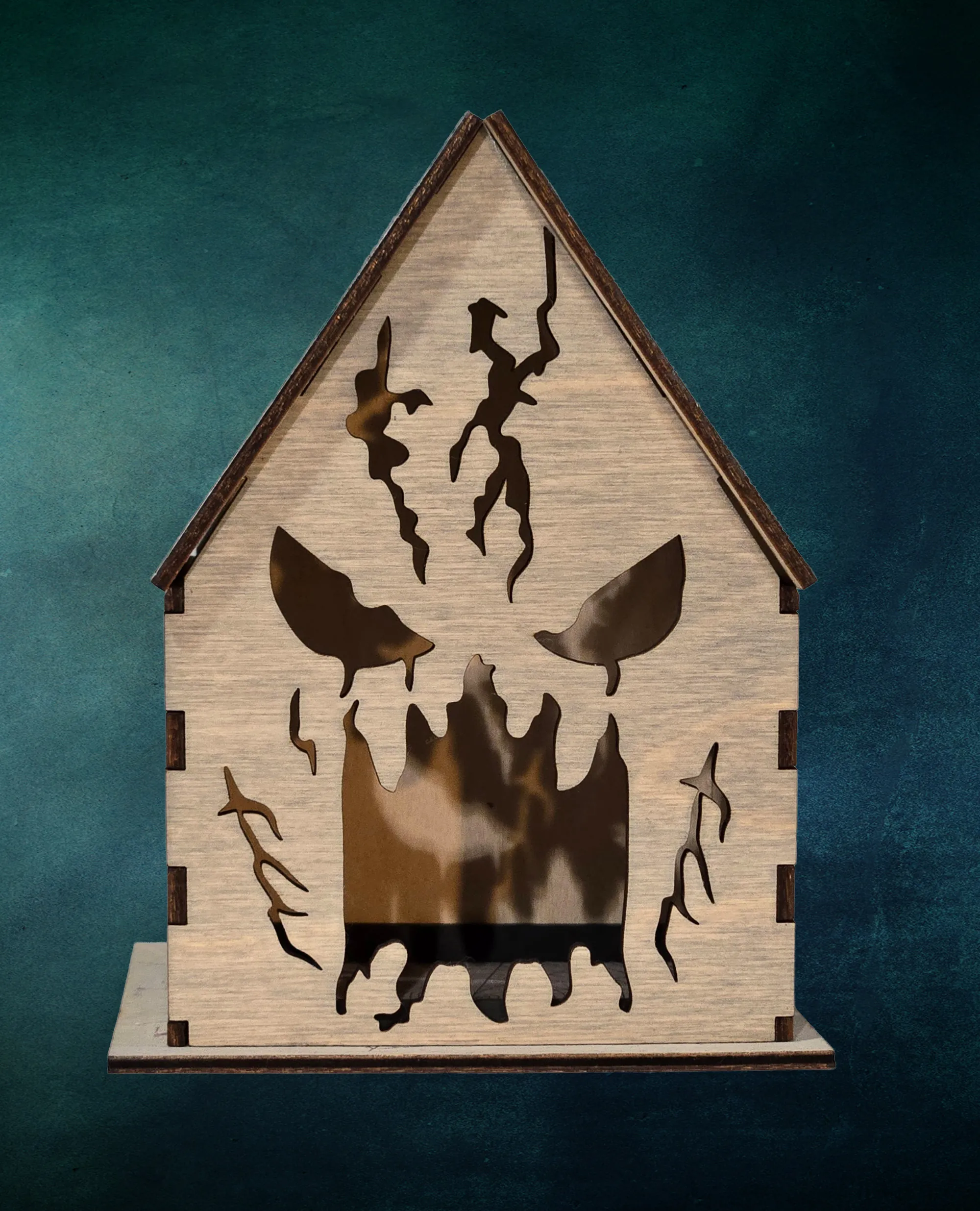
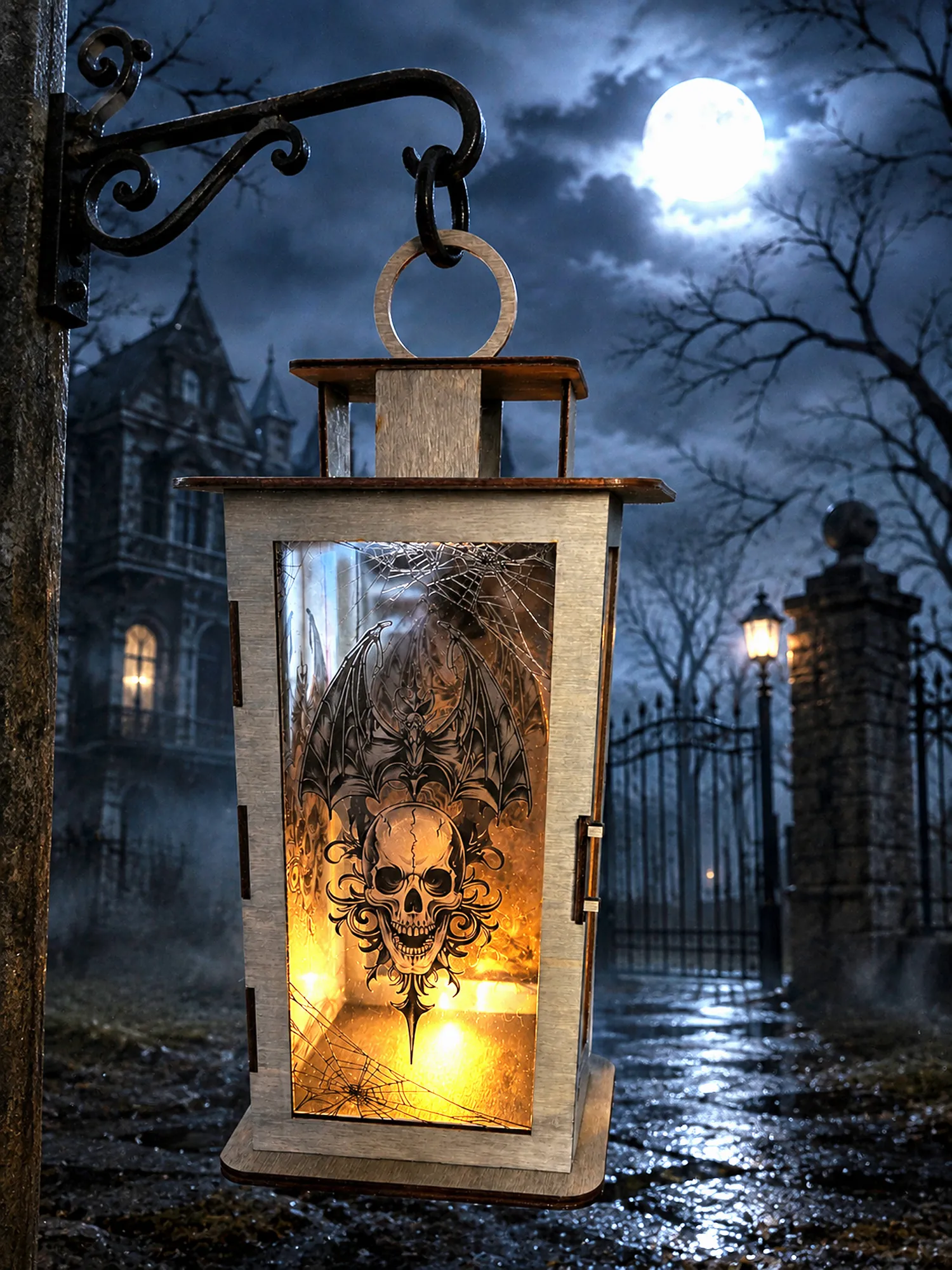
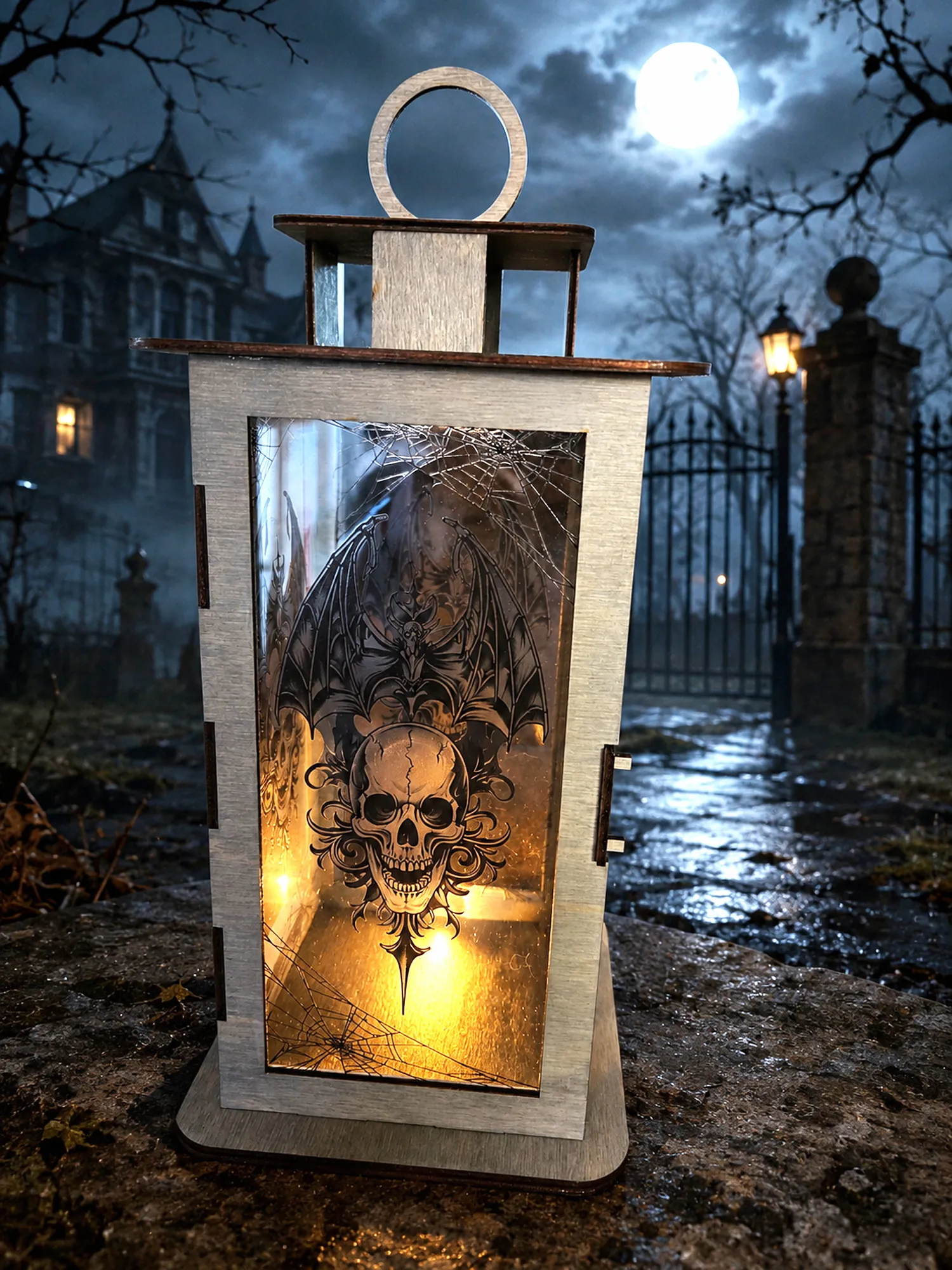
Gaslight Designs creates Halloween lanterns for displays that need more character than a string of identical lights. The Halloween lantern collection includes a set of four wooden house lanterns for a friendly path or porch grouping. For a darker focal point, the gothic skull lantern brings detailed cutwork and a warm glow to a table, step, or sheltered porch scene.
Use a lantern cluster to make the route feel welcoming, or let one detailed piece anchor a smaller yard display. Pair it with pumpkins, branches, and a clear walkway, then let the glow do the memorable work.
A simple formula
One yard scene, one clear path, and enough warm light to lead people home.
That is all a Halloween yard needs to feel festive, welcoming, and easy to enjoy after dark.
Frequently asked questions
A few details before you decorate.
What are easy Halloween yard decorations for a small yard?
Start with one focal point near the walkway or porch, then add a small cluster of pumpkins, a few silhouettes, and warm flameless light. A small yard looks more intentional when the display has one clear scene instead of many separate props.
How can I decorate my yard for Halloween on a budget?
Use a simple theme, repeat a few materials, and invest in only one or two pieces you will enjoy again next year. Pumpkins, branches, leaf piles, paper silhouettes, and a well-placed lantern can do more than a large collection of one-season props.
How do I make Halloween yard decorations safe for trick-or-treaters?
Keep the path and steps completely open, secure loose decorations against wind, and use steady flameless lighting so guests can see where they are walking. Avoid placing cords, stakes, or props where people need to step.
What lighting works best for a Halloween yard?
Warm, low-level flameless lanterns and outdoor-rated lighting work well because they create atmosphere without making every part of the yard equally bright. Use light to lead visitors toward the door, not to overwhelm the display.


