Halloween door decorations have a small but important job. They set the mood before anyone rings the bell, give trick-or-treaters a friendly signal that they have reached the right place, and make an ordinary entry feel like part of the season. The strongest displays do not need to cover every inch of the door. They need one idea that reads from the sidewalk, a little warmth after dusk, and a clear route to the handle.
Start by treating the doorway as a frame instead of a blank wall. Your door already has color, hardware, trim, steps, and perhaps a light fixture or planter. A good Halloween display works with those features. Pick a mood, build a single focal point, then add only the pieces that make that focal point feel more complete. The result is easier to put up, safer to use, and far more memorable than a pile of unrelated props.
1. Choose one mood before you buy anything
Decide whether your entry should feel friendly, mysterious, playful, or dark and dramatic. That choice prevents the most common Halloween decorating problem: pumpkins, spider webs, novelty signs, fake ravens, bright lights, and every other seasonal find all competing at the same door. A simple theme gives you a filter. If an item does not support the mood, leave it out.
For a friendly entry, use warm amber light, familiar pumpkin faces, a black-and-orange wreath, and a few small shapes such as bats or a cheerful ghost. For a quieter, more grown-up look, use natural branches, deep green or black foliage, muted pumpkins, and one detailed lantern. A dramatic doorway can use a strong silhouette, a darker wreath, and more contrast, but it still benefits from a clear center and open edges.
Look at the door from the sidewalk before settling on scale. A decoration that feels large up close can disappear against a wide porch. A large door cover can overwhelm a narrow apartment entry. The best choice is the one that still reads in one glance, then feels interesting as guests get closer. Take a quick photo from the sidewalk if you are unsure. A photo makes it easier to notice when the arrangement is too low, too small, or competing with a busy house number, planter, or porch light.
2. Make the door the focal point
A wreath is the easiest way to give a door a focal point because it uses the vertical space without taking up the threshold. A dark twig wreath, a simple orange-and-black ribbon, or a circle of dried leaves and small bats can carry the whole look. Keep it centered at eye level, then stop and look before adding anything else.
If a wreath is not your style, use a single door-friendly idea instead: a pair of large removable eyes above the peephole, a line of paper bats moving up one side, or a temporary fabric cover that does not interfere with the hardware. The door should still open easily, and the lock and handle should be obvious in low light. Halloween is more fun when guests can actually get inside.
Use removable hanging hardware rather than forcing a nail into the door. Test adhesives in a hidden spot and follow the product directions, especially on painted or stained surfaces. Keep decorations clear of hinges, weather stripping, and the bottom edge of the door. Those practical details let the display feel generous instead of fussy.
3. Frame the doorway with a few quiet layers
Once the door has a focal point, the frame can support it. A short garland around the top of the trim, two small clusters of branches, or a pair of pumpkins beside the steps adds depth without making the entrance hard to use. Think in a loose triangle: the door decoration is the high point, and the two lower accents make the scene feel grounded.
Choose two or three materials and repeat them. For example, dark branches, small pumpkins, and warm wood make a calm rustic look. Black paper bats, a striped ribbon, and amber light feel playful. A restrained palette works better than adding every Halloween color at once because the door remains the point of the display.
Leave the trim visible in places. That empty space is not unfinished. It gives the shapes room to read and helps the entry feel connected to the house rather than pasted over it. If the doorway already has planters or columns, use what is there instead of introducing more containers.
4. Let warm light do the evening work
A display that looks great at 3 p.m. can disappear completely after dusk. Warm light gives the doorway a focal point when the details are harder to see, and it makes the entrance feel welcoming rather than harsh. The simplest move is to place a small flameless lantern or two near the outer edges of the doorstep, where the glow can frame the door without blocking the path.
Use battery-powered LED candles or cool-running outdoor-rated lighting, and keep cords, batteries, and switches out of the walking route. The U.S. Consumer Product Safety Commission advises keeping candles and other fire sources away from flammable decorations. Flameless light is an easy fit around paper, fabric, dried stems, and costumes, while still giving the entry that essential Halloween glow.
Check the scene after dark from the street. If the door fades away, move one light closer to the focal point. If everything looks equally bright, turn down or remove the least useful light. One warm pool of light almost always looks better than several competing flashes.
5. Use silhouettes that read from the sidewalk
Silhouettes make a strong Halloween statement because the eye recognizes them quickly. Bats, cats, moons, crooked branches, spiders, and friendly ghosts all work because their outlines are clear. Use one subject in different sizes or positions instead of mixing five different themes. A few bats moving up the door frame, for instance, can feel lively without becoming busy.
Paper shapes and removable clings are best when they stay flat and tidy. Secure loose ends so the wind does not turn the display into a tangled distraction. If you use cobweb material, stretch it lightly over one small area rather than covering the whole door. It reads better from a distance and is less likely to interfere with the knob or catch on a visitor’s costume.
For a renter or anyone decorating a shared hallway, silhouettes and a wreath are often the most flexible answer. They take up very little space, come down cleanly, and can make a plain door feel seasonal without changing the permanent parts of the entry.
6. Keep the threshold clear and the details secure
The entryway is not just a photo backdrop. On Halloween, it may be used by children carrying bags, adults looking after them, deliveries, pets, and neighbors after dark. Keep the doormat flat, the steps visible, the handle accessible, and the path from the sidewalk to the door free of cords, loose leaves, and props that can shift underfoot.
Place heavier items low and stable. Put lightweight pieces higher on the door or trim where they cannot blow into the walkway. If wind is common at your home, skip tall stacks and delicate free-standing decorations. A calmer arrangement of a wreath, two low lanterns, and a few secured shapes will still look intentional after a windy evening.
Step outside and take the visitor’s route when you are done. Can you reach the doorbell without brushing decorations? Can you see the edge of each step? Can a guest carrying a candy bucket pass easily? If not, remove something. The display will almost always look better with a little more room around it. It also helps to check the scene after a light rain or a windy afternoon, particularly if you have used paper, fabric, or natural branches. Seasonal decor should feel festive, not like one more thing you need to rescue every evening.
7. Tie the door to the rest of the house
A doorway feels finished when it hints at the decor beyond it. Repeat one cue at a nearby window, on the mantel, or at the table: the same warm light, a black silhouette, a small pumpkin, or a natural wood detail. You do not need a matching set everywhere. A few shared details make separate areas feel like one thoughtful Halloween scene.
If you have porch steps or a small landing, use the door as the main focal point and let the lower decor stay spare. Our Halloween front porch guide has ideas for carrying a display down to the steps while keeping the walking route open. For a front room that faces the street, the Halloween window decorations guide can help you create the same glow behind the glass.
Do one final edit after dusk. Remove the piece that feels least useful, straighten the focal point, and make sure the lights work. That small pass is what makes a simple collection of decorations look like a doorway with a point of view.
Bring a handmade glow to the door
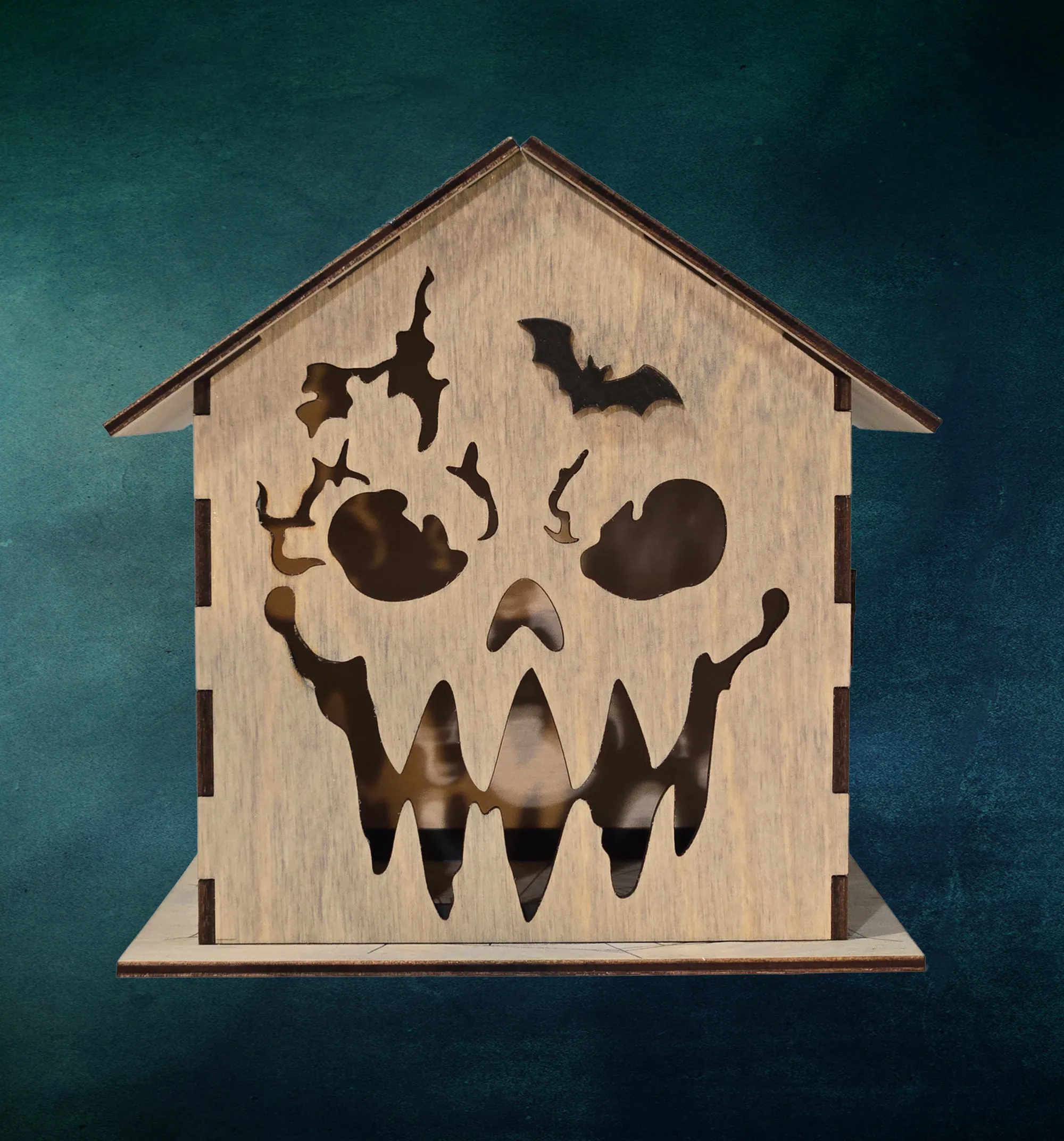
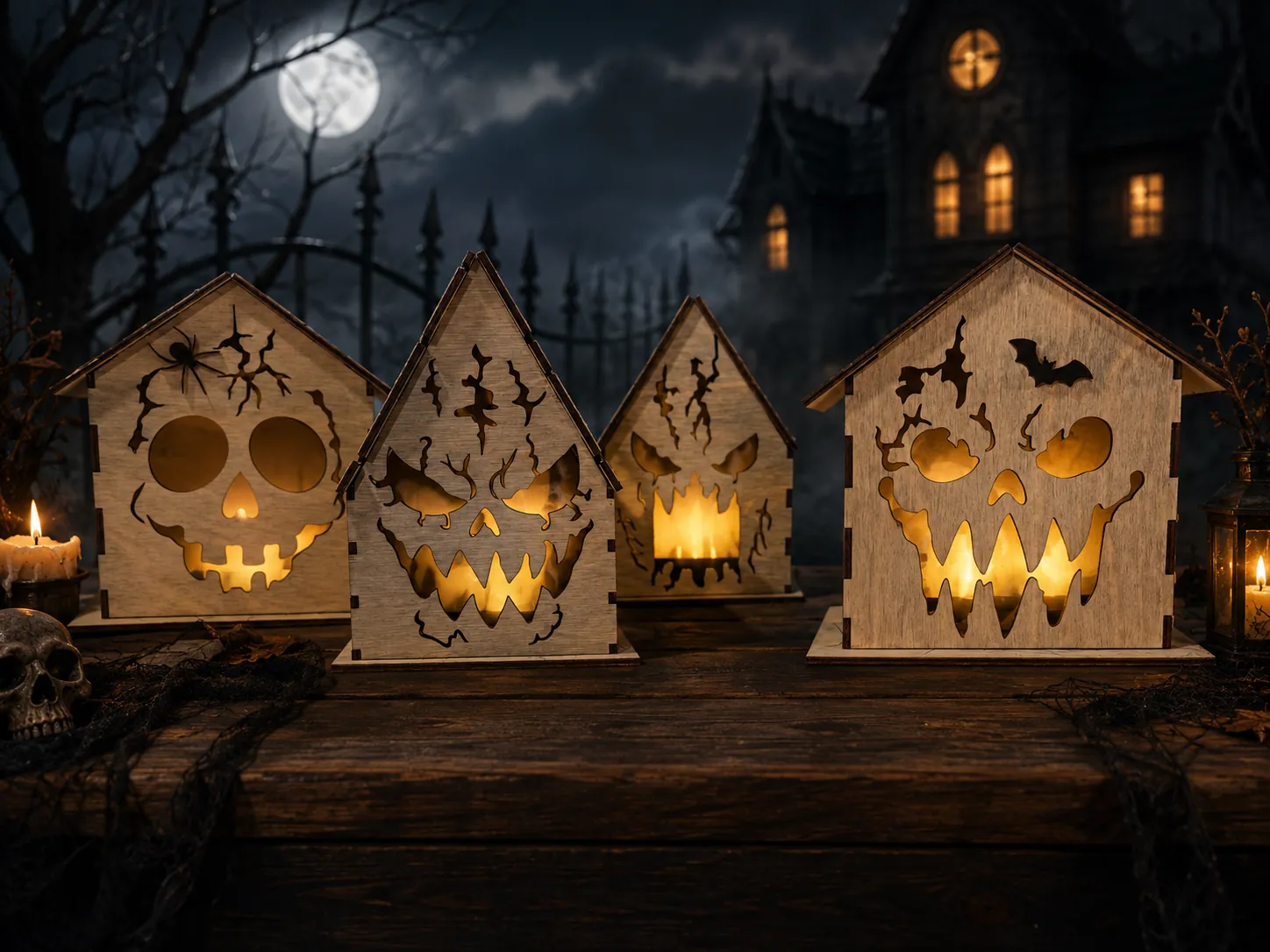
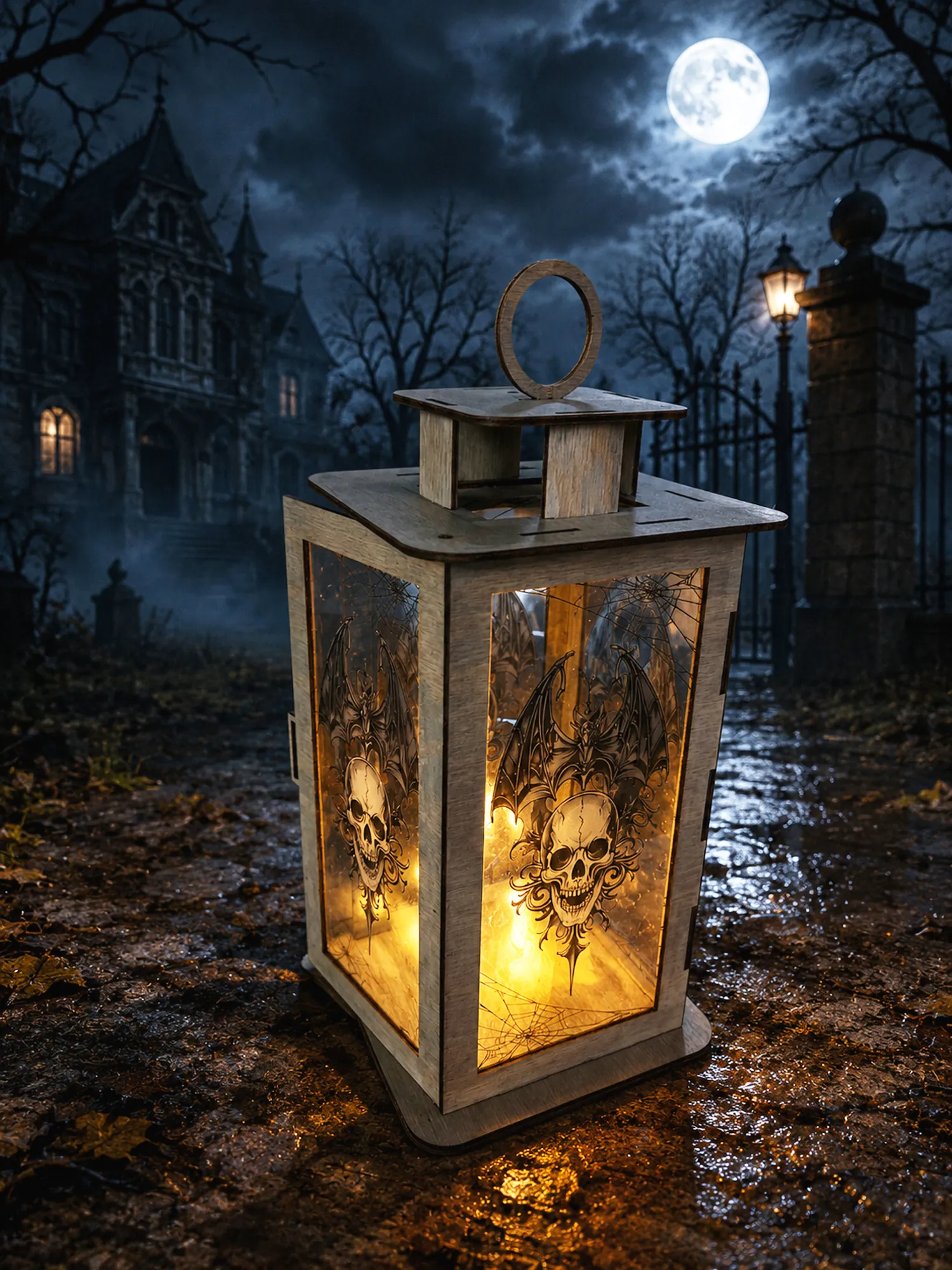
Gaslight Designs makes Halloween lanterns for people who want an entry to feel more personal than a disposable pile of party props. The Halloween lantern collection includes a four-piece wooden house set for a friendly layered scene, plus a gothic skull lantern for a darker statement. Both are made to use with flameless LED candles, so they can bring a steady warm glow to a seasonal doorway.
Use the house set when you want several small lights at different heights. Choose the skull lantern when the entry needs one strong detail. Pair either with a simple wreath and an open path, then let the handmade cutwork do the rest.
A simple rule
Give the door one clear idea, the doorstep one warm glow, and your guests a clear way in.
That balance is what makes Halloween door decorations feel inviting from the sidewalk and easy to live with all season.
Frequently asked questions
A few details before you decorate.
What is the easiest Halloween door decoration?
A seasonal wreath is the easiest place to start because it gives the door one clear focal point without covering the handle, lock, or threshold. Add one or two small details nearby only if the entry still feels bare.
How do I decorate a Halloween door without damaging it?
Use removable hooks or outdoor-safe removable strips according to their directions, and test any adhesive in an inconspicuous spot first. Keep tape, wire, and hanging pieces off weather seals, hinges, and the moving edge of the door.
How can I make Halloween door decorations safe for trick-or-treaters?
Keep the handle, lock, steps, and walking path fully open. Choose steady flameless lighting, secure loose pieces against wind, and avoid cords or props where guests need to step.
What lights work best by a Halloween door?
Battery-powered LED candles and cool-running outdoor-rated lights are practical choices. They give a doorway a visible glow without bringing an open flame close to paper, fabric, dried plants, or costumes.


